As the global economic crisis questions many long-hold beliefs about American and European economic policy, the U.S. press has discovered that some answers might be found across the Atlantic. Germany offers a fine case study for the advantages as well as drawbacks of increased government interference to bring the economy back on track.
Is the German response to the economic crisis slower because of German culture, New York Times correspondent in Berlin Nicholas Kuhlisch asked last week. His idea is that the German love for rules and Ordnung, embodied in the strict adherence to each and every sign in a German swimming pool („Nicht vom Beckenrand springen!“, „Nicht auf den Kacheln rennen!“, „Keine Schuhe im Barfussbereich!“), can also explain the transatlantic furor over economic stimulus packages.
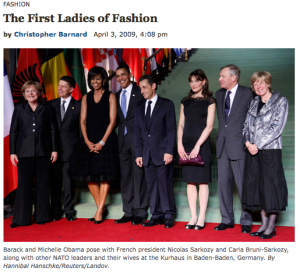
This isn’t a new episode of The Hills or Gute Zeiten, Schlechte Zeiten, but these days it seems professional journalists have all caught some of that exasperated, gawking and driveling tone usually confined to fashion (or rather, pre-teen) magazines. The object of this circus: Michelle Obama.
The First Ladies of Fashion - Screenshot from vanityfair.com
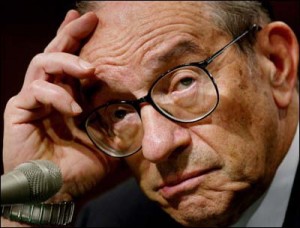
When Alan Greenspan, former Federal Reserve Chair and longtime icon of the free market, testified last October before the House Oversight Committee on the current financial crisis, he did something that he had not done much very much in his 18 glorious years as the head of the Fed: say “Oops.”
The 82-year-old acknowledged that he had made a mistake in believing that the nation’s banks, operating in their own self-interest, would adequately protect their shareholders and avoid unreasonable risks in the financial markets. Such economic decision-making, made possible through lax regulation and low interest rates that Mr. Greenspan once endorsed but is now shying away from, was, as he put it, “a flaw in the model that defines how the world works.” Indeed, Mr. Greenspan’s world doesn’t seem to be making much sense as it once did. [Read more]
Virtually all university students know about the pains of procrastinating. Why start with the assignment right now instead of in a couple of minutes? Nonetheless, we do it all the time and get ourselves in considerable trouble most of the time. Suddenly, time is short and deadlines approach sooner than we anticipated. Sounds familiar?
There is help to make the right decision. One solution is to pledge to deliver your next paper on time. If you fail, you will donate a significant sum to charity. In this scenario, the short-term incentives to keep delaying are contrasted with the somewhat clearer long-term consequences of loosing money. The question remains—why do we fail to make the right choice so often, and how can we improve?
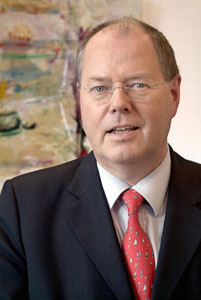
German Finanzminister Peer Steinbrück is interviewed in the recent Newsweek issue, and he doesn’t sound too happy:
Doesn’t an unprecedented crisis call for unprecedented measures? “It’s the yearning for the Great Rescue Plan. It doesn’t exist. It doesn’t exist! Dealing with an unprecedented crisis is a puzzle, a trial-and-error.”
As we’ve been wondering what to do with our political interest now that THE election is over, here is a suggestion: Why not take part in politics ourselves?
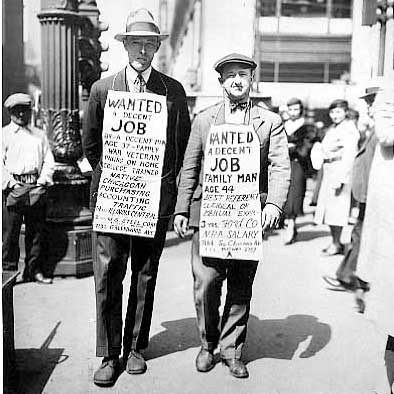
Government officials today announced the highest unemployment rate, 6.5 percent, the country has seen since 1994. October thus marked the tenth consecutive month of decline. President-elect Barack Obama is facing what might well be the greatest challenge of his presidency – while scrambling to put together a team that will calm the markets.
I know… it sounds like a relic from the 70s or something, which it actually is. But obviously it’s one of those ideas that even gain relevance over time.
That said, I have to add that I really feel for the 1000 people losing their already underpaid jobs. But it also shows that there is not unlimited demand for ever the same products. I admit that it gereally makes sense to have chain stores in some respect. But it also makes traveling (and living) so not exciting at times, because it kills cultural particularities.
Her comes a sermon by Reverend Billy, founder of the Church of Stop Shopping, getting the word out to the masses on Fox Biz News:
“Budweiser will be brewed in the same breweries … by the same people, according to the same recipe,” Carlos Brito, InBev’s chief executive officer told CNN, after his company had finally closed the deal on buying Anheuser-busch – the American company that brews Budweiser Beer. Alas, this won’t settle it with the die-hard fans of an American icon, who accuse InBev of merely paying lip-service to keep this piece of Americana alive.




 Subscribe via RSS
 Subscribe via Email